Why Air and Gas Failures Kill Ships and People
Air and gas systems occupy a unique position in marine engineering. They are neither fuel nor structure, yet without them engines do not start, safety systems do not function, fires cannot be controlled, and human life is placed immediately at risk.
Unlike liquid systems, failures in air and gas systems often leave no visible evidence until the moment of catastrophe. Pressure is lost silently. Oxygen content changes invisibly. Explosive mixtures form without smell. Automation continues to report “normal” until the system has already failed.
History shows that many of the most serious marine casualties — including explosions, total power loss, fires, and mass casualties — have involved air or gas systems as either the initiating fault or the silent enabler.
This article documents what actually failed, why it failed, and what engineers learned the hard way.
Starting Air Systems – Explosions, Fires, and Engine Destruction
The Fundamental Risk
Starting air systems store large volumes of compressed air at pressures typically between 25 and 30 bar. When contaminated with oil, carbon deposits, or fuel vapour, they become explosive vessels rather than benign utilities.
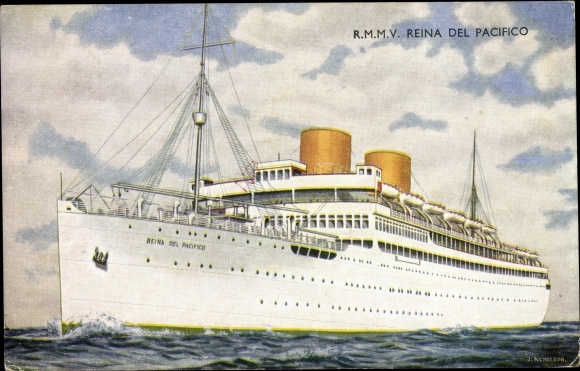
Documented Fatal Incident: MV Reina del Pacifico (1947)
The most severe crankcase and air-related explosion in terms of human life occurred aboard the passenger ship MV Reina del Pacifico in 1947.
During manoeuvring, a violent explosion originating in the engine room resulted in:
- 28 fatalities
- 23 serious injuries
- catastrophic damage to machinery spaces
Subsequent investigation linked the event to oil mist and hot surfaces, compounded by inadequate understanding at the time of crankcase ventilation and air-fuel ignition behaviour. Although classified historically as a crankcase explosion, modern analysis recognises the interaction between starting air, lubricating oil mist, and ignition sources as central to the scale of destruction.
This incident later influenced:
- crankcase oil mist detector requirements
- relief door design
- air system cleanliness standards
Common Historical Failure Pattern
Throughout the mid-20th century, multiple documented engine room explosions shared a common chain:
- Compressor oil carryover into starting air lines
- Oil accumulation in air receivers and manifolds
- Elevated discharge temperatures
- Ignition during engine start
These events drove the modern insistence on:
- oil-free compressors
- automatic drains
- strict receiver inspection regimes
Control & Instrument Air – When Ships Lose the Ability to Shut Down
Why Instrument Air Is Safety-Critical
Instrument air does not provide propulsion, but it provides control authority. On modern ships — especially tankers, offshore units, and FPSOs — the loss of instrument air can prevent:
- emergency shutdown valves from closing
- blowdown systems from activating
- fire dampers from positioning correctly
Offshore Incident Pattern (North Sea, 1990s–2000s)
Several offshore accident investigations (notably North Sea units in the late 1990s) identified instrument air dryer failure as a critical precursor to process loss.
In these cases:
- moisture entered pneumatic control lines
- actuators failed to respond on demand
- control valves froze in last position
- escalation occurred because systems appeared powered
While individual unit names are often withheld in public summaries, the engineering lesson was clear:
instrument air is a single-point vulnerability unless actively monitored for quality, not just pressure.
This led directly to:
- dew-point alarms
- dual dryer arrangements
- ISO 8573-1 air quality adoption offshore
Scavenging & Charge Air – Fires That Start Where Engineers Don’t Look
The Overlooked Danger
Scavenge spaces and charge air systems combine:
- hot surfaces
- oil mist
- carbon deposits
- oxygen-rich airflow
Historically, these spaces were treated as passive volumes rather than active fire risks.
Recurrent Incident Type: Scavenge Fires Leading to Engine Damage
Multiple main engine casualties across bulk carriers and container ships in the 1980s–2000s revealed a repeating pattern:
- charge air cooler fouling reduced air density
- combustion efficiency dropped
- exhaust temperatures rose
- unburnt fuel and oil entered scavenge spaces
- fires ignited, sometimes escalating to piston seizure or liner damage
In several class reports, engines were written off not because of the fire itself, but because continued operation after early warning signs destroyed liners and rings.
Modern monitoring of scavenge temperature differentials and pressure drop was introduced specifically because of these events.
Inert Gas Systems – Explosions Caused by “Safe” Atmospheres
The Dangerous Assumption
Inert gas systems are designed to prevent explosions. History shows they can also create them, if misunderstood or improperly maintained.
Tanker Explosion Case Pattern (1970s–1980s)
Multiple tanker explosions during cargo operations were traced to:
- oxygen concentration exceeding safe limits
- faulty oxygen analysers
- blocked sample lines
- crew trusting a single sensor without cross-checking
In several incidents, tanks believed to be inerted were later found to contain oxygen levels well above 10%, placing them squarely within the flammable envelope.
These failures directly influenced:
- SOLAS inert gas requirements
- redundant oxygen analysis
- mandatory deck seals and non-return barriers
Ventilation Failures – Invisible Contributors to Fatal Accidents
Ventilation as a Safety System
Ventilation is often discussed in terms of comfort. Accident investigation records repeatedly show it is a life-critical safety system.
Enclosed Space Fatalities Linked to Ventilation Failure
Numerous fatal enclosed-space accidents aboard cargo vessels have involved:
- ventilation fans isolated for maintenance
- spaces assumed safe due to “open time”
- oxygen depletion or toxic gas accumulation
In many cases, gas detection equipment functioned correctly — but airflow did not carry the hazard to the sensor.
This has shaped modern enclosed space entry protocols and forced ventilation requirements.
Gas Detection Systems – When Silence Is the Failure
Historical Failure Mode
Gas detectors rarely “fail loudly.” They fail by:
- drifting calibration
- clogging sample heads
- being placed outside gas accumulation zones
Documented Case Pattern: Tank Entry Fatalities
Investigations into multiple fatalities aboard chemical tankers and product carriers revealed:
- detectors reading normal
- portable analysers giving conflicting results
- gas layering below sensor height
These cases reinforced:
- the requirement for portable multi-gas testing
- testing at multiple vertical levels
- continuous ventilation during entry
Engineering Reality – What History Actually Teaches
Across decades of incidents, the consistent truths are uncomfortable:
- Air and gas failures are often secondary, but decisive
- Automation masks degradation rather than preventing it
- Engineers are prosecuted not for failure — but for false records
- The most dangerous faults are the ones that do not trip alarms
The record shows that most disasters were preceded by warning signs that were misunderstood, ignored, or undocumented.