ENGINE ROOM → Control & Operations
Position in the Plant
System Group: Control & Operations
Primary Role: Maintain continuous, stable, and efficient electrical power under all operating modes
Interfaces: Generators · Switchboards · PMS/EMS · Propulsion · Thrusters · Hotel Load · Batteries · Shore Power · IAS/AMS
Operational Criticality: Absolute
Failure Consequence: Blackout · Loss of propulsion · Loss of DP/steering · Fire escalation · Environmental non-compliance
Energy and power management systems are not fuel-saving “extras”.
They are stability systems. Efficiency is a consequence of correct control — not the primary objective.
Introduction
A modern ship is an electrical island. There is no external grid to absorb errors, no spinning reserve beyond what is already online, and no tolerance for instability during manoeuvring, DP operations, cargo handling, or emergency response.
Every blackout at sea is a failure of energy management, not merely a generator fault.
Energy / Power Management Systems (EMS / PMS) exist to ensure that:
- Power is always available to critical consumers
- Generators operate in their efficient and mechanically safe range
- Electrical transients do not cascade into vessel-wide failures
- Redundancy is preserved under fault conditions
- Emissions and fuel penalties are controlled without compromising safety
At their core, EMS/PMS systems act as the brain of the ship’s electrical system, continuously balancing supply, demand, and reserve — faster than any human operator can.
Contents
- Electrical Power Architecture at Sea
- PMS Core Functions and Control Logic
- Generator Coordination and Load Sharing
- Load Management and Blackout Prevention
- Batteries, Hybrid Systems, and Energy Management
- Shaft Generators, Grid Converters, and Power Electronics
- Engine Load Factor, BSFC, and Why Low Load Kills Engines
- Operational Modes: Harbour, Manoeuvring, Sea, DP
- PMS Integration with IAS, Alarms, and Protection
- Human Factors and Failure Modes
- What Engineers Actually Manage — Not What Brochures Say
1. Electrical Power Architecture at Sea
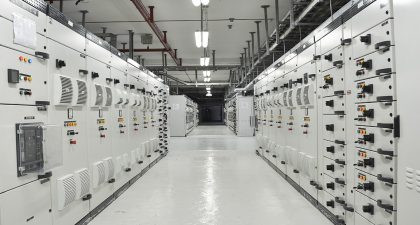
On most vessels, electrical power is generated by multiple diesel generator sets, each comprising a prime mover and alternator. Redundancy is mandatory — not for efficiency, but survivability.
Additional power sources may include:
- Shaft generators (via grid converters)
- Battery Energy Storage Systems (BESS)
- Shore power connections
- Fuel cells or renewables (limited but growing)
Unlike a shore grid, shipboard generators do not automatically share load correctly when paralleled. Without coordination, one unit may overload while another idles — a mechanically unsafe and inefficient condition.
This is where the PMS becomes essential.
2. PMS Core Functions and Control Logic
A Power Management System performs three fundamental tasks:
1. Starting and Stopping Power Sources
As demand increases, the PMS automatically starts additional generators, synchronises them, and shares load. As demand falls, it safely unloads and stops surplus units.
This is not convenience automation. Manual start/stop under fluctuating load is one of the fastest ways to cause blackouts.
2. Load Disconnection (Load Shedding)
When generation capacity is threatened, the PMS disconnects non-essential consumers in a predefined priority order to preserve power to critical systems.
Load shedding is defensive, not optional.
3. Coordination of All Power Suppliers
Diesel generators, batteries, shaft generators, and grid converters do not “cooperate” naturally. The PMS enforces:
- Active power sharing (kW)
- Reactive power sharing (kVAr)
- Frequency and voltage stability
Without this coordination, hybrid systems are unstable by design.
3. Generator Coordination and Load Sharing
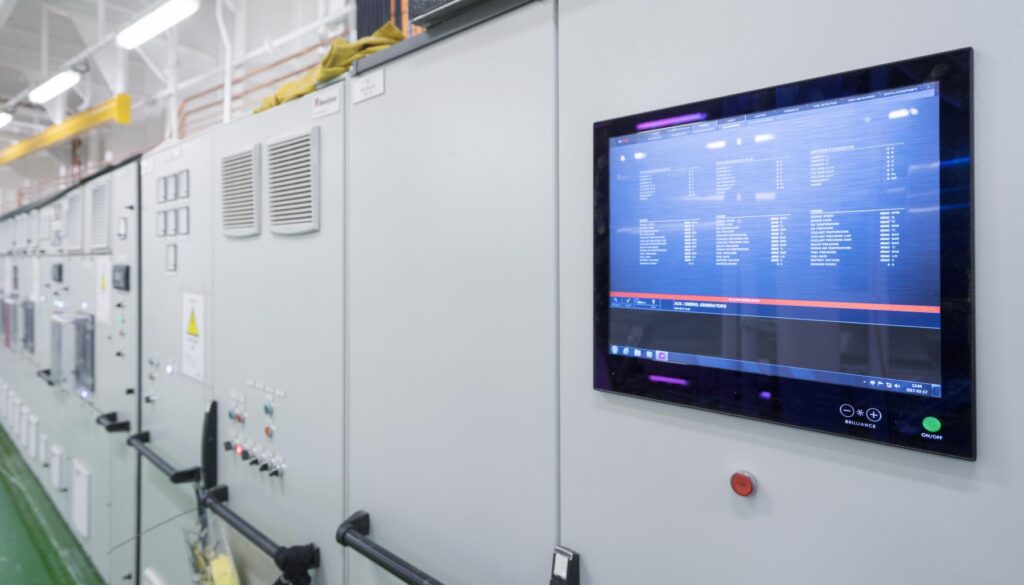
When generators operate in parallel, the PMS ensures that each unit carries a balanced share of load relative to its rated capacity — not necessarily equal kW, but equal percentage load.
This matters because:
- Overloaded units suffer thermal and mechanical stress
- Underloaded units suffer incomplete combustion, glazing, fouling, and wet stacking
Reactive current sharing is equally critical. Poor kVAr balance leads to overheating alternators, unstable voltage, and protection trips.
Modern PMS systems continuously adjust governor and AVR references to maintain balance in real time.
4. Load Management and Blackout Prevention
Blackouts rarely occur because “power ran out”.
They occur because load increased faster than generation could respond.
Typical blackout triggers:
- Thrusters starting without pre-warning
- Cargo pumps starting simultaneously
- HVAC compressors cycling unexpectedly
- Poor PMS mode selection
- Standby generator unavailable or inhibited
A properly configured PMS anticipates these events by:
- Maintaining spinning reserve
- Starting standby units proactively
- Using batteries for transient support
- Shedding low-priority consumers automatically
The goal is not to keep everything running — it is to keep the right things running.
5. Batteries, Hybrid Systems, and Energy Management
Battery systems fundamentally change power dynamics.
Their greatest value is not zero-emission operation, but dynamic stability.
Key roles of BESS:
- Peak shaving during transient loads
- Avoiding unnecessary generator start/stop cycles
- Maintaining generator load in efficient ranges
- Improving blackout recovery
- Supporting silent or low-emission operation where required
Diesel engines are most efficient when:
- Warm
- Operating at steady load
- Above minimum load factor
Without batteries, generators may start, load briefly, then stop — a worst-case scenario for fuel consumption, emissions, and engine health.
With batteries, generators can remain online, loaded correctly, while batteries absorb short-term fluctuations.
This is energy management, not just power management.
6. Shaft Generators, Grid Converters, and Power Electronics
Shaft generators introduce complexity. They decouple electrical frequency from engine speed using grid converters.
This allows:
- Electrical power generation at varying main engine speeds
- Reduced auxiliary generator use at sea
- Improved fuel economy under steady propulsion
However, grid converters must be coordinated with generators and batteries. Without PMS control, competing voltage and frequency references cause instability.
Hybrid systems without a competent PMS are inherently unsafe.
7. Engine Load Factor, BSFC, and Why Low Load Kills Engines
Engine efficiency is governed by Brake Specific Fuel Consumption (BSFC), which varies with load.
At low load:
- Fuel consumption per kWh increases
- Combustion quality degrades
- Cylinder glazing, carbon build-up, and lube oil contamination increase
Auxiliary engines are particularly vulnerable because they are often run in parallel at low loads for long periods — especially during:
- Discharge operations
- Standby periods
- Tank cleaning
- Restricted waters
- Ballast exchange
Load management aims to consolidate load, not distribute it blindly.
Running one generator at healthy load is usually far better than running two lightly loaded units.
The PMS exists to enforce this discipline automatically.
8. Operational Modes and PMS Behaviour
PMS logic changes with vessel operating mode:
- Harbour: minimal generators, shore power integration, limited load
- Manoeuvring: maximum redundancy, rapid load response
- Sea: optimised efficiency, shaft generator integration
- DP / Offshore: strict redundancy, no single failure blackout philosophy
Incorrect mode selection is a frequent cause of incidents. PMS automation is only as good as the assumptions it is given.
9. PMS Integration with IAS, Alarms, and Protection
The PMS does not operate in isolation.
It interfaces with:
- Alarm and Monitoring System (AMS)
- Generator protection relays
- Switchboard protection
- Emergency generator logic
- IAS / DCS
Alarms such as:
- Generator overload
- Reverse power
- Frequency deviation
- Bus instability
must be understood, not merely acknowledged. PMS alarms are predictive — they are often warning of an impending blackout, not reporting one.
10. Human Factors and Failure Modes
Most PMS failures are not software failures.
They are:
- Disabled standby generators
- Incorrect priority tables
- Inhibited alarms
- Poor understanding of PMS logic
- Manual intervention at the wrong time
Engineers must understand what the PMS is trying to achieve — not fight it.
A PMS is not there to make decisions for engineers.
It is there to execute decisions faster than humans can.
11. Vendor Systems
Systems such as ABB PEMS™ and ComAp AC PMS implement these principles using high-speed digital integration with switchboards, protection devices, governors, AVRs, and batteries.
Their value lies not in brand, but in:
- Deterministic control
- Proven load-sharing algorithms
- Robust fault handling
- Transparent logic engineers can trust
The best PMS is the one the engineering team understands and respects.
Closing Reality
Energy management is not about saving fuel.
It is about preventing chaos.
Efficiency, emissions reduction, and cost savings follow naturally when:
- Engines operate in their designed range
- Electrical systems are stable
- Redundancy is preserved
- Transients are absorbed, not amplified
A ship with poor power management is not inefficient.
It is unsafe.