Elastic Reality, Resonance Risk, and Why Perfect Alignment Does Not Exist
ENGINE ROOM → Propulsion & Transmission
System Group: Structural Dynamics & Power Transmission Integrity
Primary Role: Control of mechanical stress and vibration within acceptable limits
Interfaces: Engine · Gearbox · Shafting · Bearings · Hull Structure · Propeller
Operational Criticality: Continuous
Failure Consequence: Fatigue cracking → bearing failure → shaft damage → propulsion loss
Alignment and vibration are not conditions to be eliminated.
They are realities to be managed.
Position in the Plant
Every rotating propulsion system is elastic. Shafts twist, hulls bend, bearings move, and loads fluctuate.
Alignment is therefore not a fixed state, but a band of acceptable distortion within which machinery can survive.
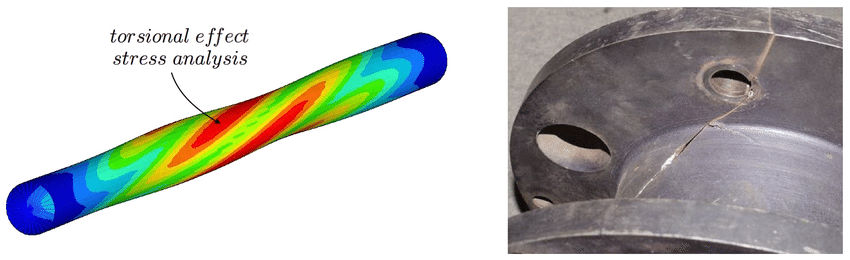
Torsional vibration is the dynamic expression of this elasticity. It cannot be removed, only controlled.
Contents
Alignment Purpose and Design Intent
Elastic Shaftlines and Hull Interaction
Cold Alignment vs Hot Alignment Reality
Torsional Vibration Fundamentals
Critical Speeds and Resonance
Measurement, Monitoring, and Interpretation
Failure Development and Damage Progression
Human Oversight and Engineering Judgement
1. Alignment Purpose and Design Intent
The purpose of alignment is load distribution, not straightness.
Bearings must share load evenly. Shafts must operate within allowable bending and shear limits.
Perfect alignment on shore guarantees misalignment at sea.
Design intent therefore allows controlled misalignment under known conditions.
2. Elastic Shaftlines and Hull Interaction
Hull deflection varies with:
- loading condition
- ballast state
- wave action
- thermal gradients
These movements shift bearing positions continuously.
Shaftlines must tolerate this motion without concentrating load.
Over-stiff systems fail faster than compliant ones.
3. Cold Alignment vs Hot Alignment Reality
Cold alignment is a starting point.
Hot alignment — under operating temperature and load — defines real behaviour.
Thermal growth of engines and gearboxes alters geometry significantly. Ignoring this leads to edge loading and premature bearing failure.
4. Torsional Vibration Fundamentals
Combustion is not continuous. It is impulsive.
Each firing event introduces torque fluctuation into the shaftline. This produces torsional oscillation.
If oscillation frequency coincides with natural system frequency, resonance occurs.
Resonance amplifies stress dramatically.
5. Critical Speeds and Resonance
Critical speeds are not theoretical curiosities.
Operating continuously within barred speed ranges accelerates:
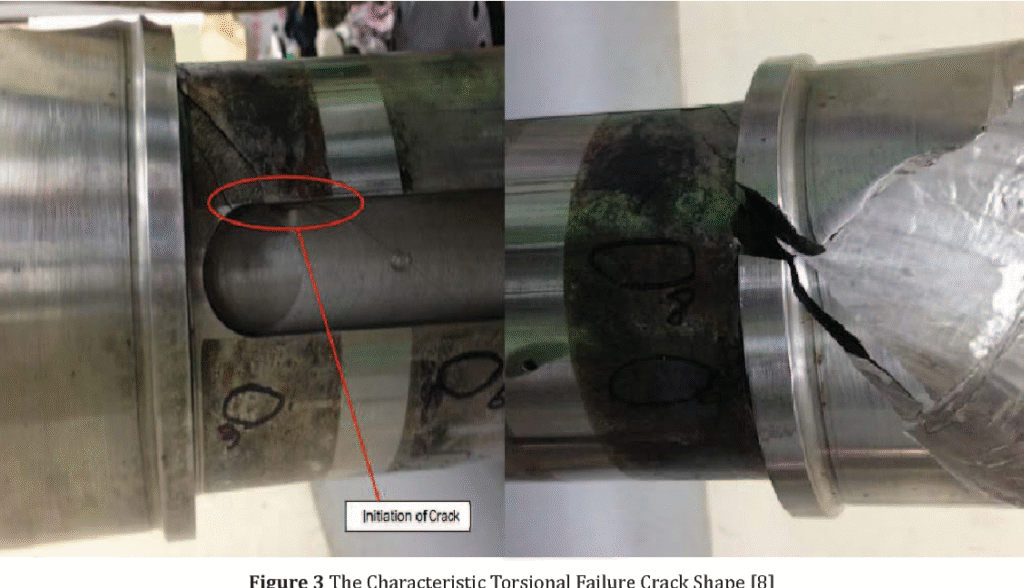
- fatigue cracking
- coupling failure
- gear tooth damage
Avoidance relies on operational discipline, not just design.
6. Measurement, Monitoring, and Interpretation
Vibration monitoring provides data, not answers.
Engineers interpret:
- amplitude
- frequency
- phase relationships
Trend deviation matters more than absolute values.
A quiet system can still be destructive.
7. Failure Development and Damage Progression
Misalignment and vibration failures progress through:
- uneven bearing loading
- oil film breakdown
- micro-crack initiation
- fatigue propagation
- sudden failure
By the time noise or heat appears, structural damage is often advanced.
8. Human Oversight and Engineering Judgement
No alarm announces “alignment is deteriorating”.
Engineers detect it through:
- vibration character
- bearing behaviour
- oil debris trends
Judgement, not instrumentation, prevents catastrophic failure.
Relationship to Adjacent Systems and Cascading Effects
Alignment and vibration influence:
- gearbox life
- seal integrity
- propeller loading
- hull fatigue
Every propulsion system failure has an alignment component.