Failure Development, Diagnosis Logic, and Engineering Decision-Making in Marine Plants
Contents
- Purpose and Design Intent of Troubleshooting
- Why Marine Systems Rarely Fail Cleanly
- Fault Types and Failure Behaviour
- Troubleshooting Architecture: From Symptom to Cause
- Dominant Fault Domains in Marine Plants
5.1 Thermal and Cooling-Related Faults
5.2 Fluid Systems Faults (Oil, Fuel, Water)
5.3 Mechanical and Rotating Equipment Faults
5.4 Electrical and Control Faults
5.5 Human-Induced Faults - Tools, Indicators, and Evidence Hierarchy
- Control Under Real Operating Conditions
- Fault Escalation, Masking, and Secondary Damage
- Human Oversight, Bias, and Engineering Judgement
- Relationship to Planned Maintenance and System Design
1. Purpose and Design Intent of Troubleshooting
Troubleshooting exists to interrupt failure progression, not to restore perfection.
Marine systems are designed to tolerate degradation. They are not designed to tolerate incorrect intervention.
The goal of troubleshooting is therefore to:
- stabilise the system
- preserve margin
- prevent escalation
- buy time for corrective action
The most dangerous outcome is not a fault — it is false confidence.
2. Why Marine Systems Rarely Fail Cleanly
Marine plants operate continuously, often near material and thermal limits.
Failures therefore:
- develop slowly
- propagate across systems
- disguise themselves as unrelated symptoms
A cooling fault may present as:
- lubrication alarms
- electrical trips
- fuel instability
- exhaust temperature deviation
The system that alarms is rarely the system that is failing.

3. Fault Types and Failure Behaviour
All marine faults fall into a small number of behavioural categories:
- Hard failures – immediate, obvious (rare)
- Soft failures – gradual loss of margin (common)
- Intermittent faults – appear and disappear
- Masked faults – hidden by control systems
- Secondary faults – caused by incorrect response
Most damage occurs during response, not during initial failure.
4. Troubleshooting Architecture: From Symptom to Cause
Effective troubleshooting follows a fixed logic:
- Observe behaviour, not alarms
- Identify what has changed
- Establish the first abnormal event
- Stabilise before correcting
- Confirm cause before action
Skipping steps creates secondary faults.
5. Dominant Fault Domains in Marine Plants
5.1 Thermal and Cooling-Related Faults
Common symptoms:
- rising temperatures with stable flow
- excessive valve travel
- loss of control margin
- frequent alarms without clear cause
Typical root causes:
- fouled heat exchangers
- air ingress
- sensor drift
- incorrect bypass configuration
Thermal faults propagate slowly but destroy systems silently.
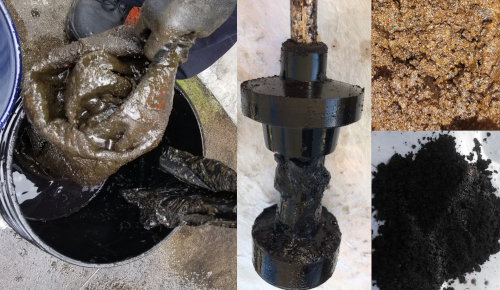
5.2 Fluid Systems Faults (Oil, Fuel, Water)
Fluid systems fail through:
- contamination
- viscosity deviation
- aeration
- chemical breakdown
Symptoms often appear downstream:
- bearing temperature rise
- injector problems
- unstable combustion
- pump cavitation
Treating the symptom accelerates damage.
5.3 Mechanical and Rotating Equipment Faults
Mechanical faults are usually secondary.
Common triggers:
- thermal distortion
- lubrication breakdown
- misalignment from temperature gradients
- vibration induced by fluid instability
Noise is a late indicator. Temperature and load trends matter more.
5.4 Electrical and Control Faults
Electrical faults often present as:
- nuisance trips
- intermittent shutdowns
- unexplained alarms
Root causes frequently include:
- overheating
- cooling loss
- sensor drift
- grounding issues
Electrical systems are intolerant of thermal abuse.

5.5 Human-Induced Faults
The most common fault category.
Includes:
- incorrect valve alignment
- bypasses left open
- isolation not restored
- parameter “tweaking” without understanding
Human faults often mask original failures and complicate diagnosis.
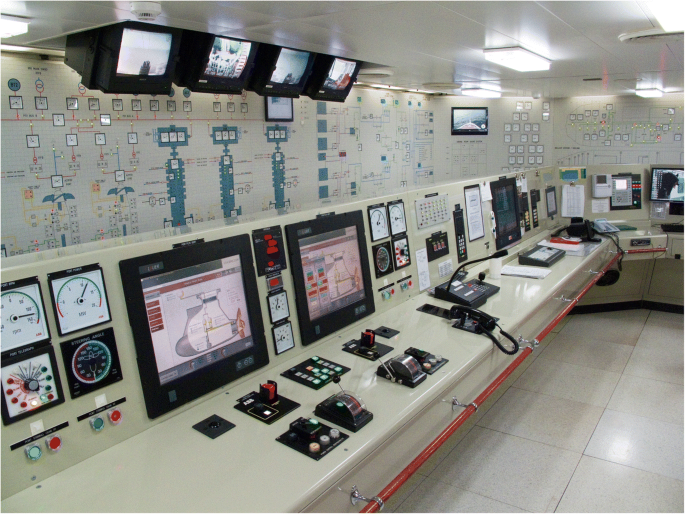
6. Tools, Indicators, and Evidence Hierarchy
Not all data is equal.
Evidence reliability hierarchy:
- Physical observation
- Local gauges
- Trend data
- Alarms
- Control room summaries
Relying on alarms alone guarantees late response.
7. Control Under Real Operating Conditions
Faults rarely appear at design load.
They emerge during:
- manoeuvring
- load changes
- start-up
- degraded operation
Systems that only fail during transitions indicate loss of margin, not sudden failure.
8. Fault Escalation, Masking, and Secondary Damage
Control systems compensate for degradation until:
- valves reach limits
- pumps max out
- temperatures drift uncontrollably
At that point, failures accelerate.
Incorrect troubleshooting actions commonly cause:
- thermal shock
- pressure imbalance
- contamination spread
Secondary damage often exceeds original fault damage.


9. Human Oversight, Bias, and Engineering Judgement
Common cognitive traps:
- fixing what alarmed first
- trusting automation over observation
- assuming single-cause failures
- over-correcting parameters
Good engineers slow down under pressure.
The correct response is often less action, not more.
10. Relationship to Planned Maintenance and System Design
Troubleshooting effectiveness depends on:
- system design clarity
- accessibility
- instrumentation quality
- maintenance discipline
Well-designed systems fail predictably. Poorly designed systems fail creatively.
Troubleshooting feeds back into:
- maintenance planning
- operating procedures
- system upgrades
- crew training